Many home buyers worry after purchase that their flat may not be fully Vastu-compliant, especially if friends or relatives point out issues later. This anxiety is understandable because a home is a long-term investment, and no one wants to feel they made a costly mistake. However, most traditional Vastu principles were developed for independent houses where layout, orientation, and surroundings could be controlled. In modern apartments, structural walls, plumbing lines, and building orientation are fixed long before an individual buyer chooses a unit. This means minor deviations are extremely common and rarely a sign of impending problems.
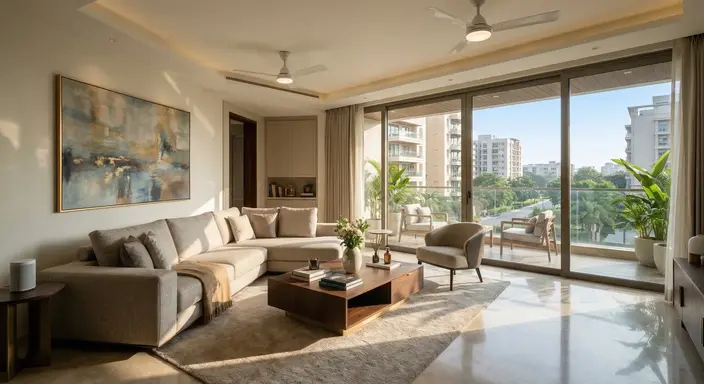
What affects daily life far more than directional alignment is how the home actually performs. Adequate daylight, cross-ventilation, manageable indoor temperatures, privacy, and noise levels have a direct impact on comfort and health. For example, a well-ventilated kitchen with proper exhaust will function better than a poorly ventilated one placed in a theoretically ideal zone. Similarly, a bedroom that is quiet and cool will promote better sleep regardless of whether it sits in the textbook location. Many perceived Vastu issues can also be balanced through interior layout choices, furniture placement, lighting, and maintenance rather than structural changes.
It is also important to remember that millions of families live peacefully in homes that do not perfectly follow Vastu guidelines. Human well-being depends on a complex mix of environment, relationships, lifestyle, and financial stability, not a single architectural factor. If your home feels comfortable, safe, and supportive of your daily routines, it is unlikely to cause the negative outcomes people fear. Instead of focusing on what cannot be changed, most experts recommend improving controllable aspects such as cleanliness, organization, ventilation, and natural light. A calm, functional home environment almost always matters more than strict directional perfection.
When evaluating whether a deviation is worth acting on, it helps to separate genuine livability concerns from symbolic ones. An issue that meaningfully affects sunlight, airflow, or privacy deserves attention. An issue that is purely directional, with no practical consequence, rarely does. If you are concerned about resale implications, it is worth noting that buyers in most urban markets prioritise floor plan, building quality, and location over strict Vastu compliance, particularly in cities with diverse buyer profiles.