Quick summary for concerned homeowners: If your toilet is not in the “ideal” direction, it does not automatically make a home unsuitable. In modern buildings, ventilation, hygiene, drainage, and overall design quality have a far greater impact on comfort and well-being than compass placement alone.
The Modern Toilet Vastu Concern
Few aspects of home design generate as much anxiety for Indian homebuyers as bathroom placement. Discovering a toilet in the north-east or south-west corner of a floor plan can create immediate doubt, especially when family members or advisors warn that it may affect prosperity, health, or stability.
Traditional Vastu guidelines, however, were developed for courtyard houses with abundant natural ventilation and flexible planning. Modern apartments and urban homes operate under very different constraints. Plumbing stacks, structural grids, and space efficiency often determine bathroom locations long before buyers see the plan.
Understanding the intent behind these recommendations helps transform Vastu from a source of fear into a framework for thoughtful design.
Best Toilet Direction as per Vastu
The north-west zone is widely considered the most suitable location for toilets in both independent houses and apartments.
This area is associated with movement and airflow, making it compatible with functions related to disposal. Toilets placed here typically remain peripheral to the main living zones while still allowing effective ventilation and accessibility.
The west or west-of-south-west area is also commonly regarded as acceptable, particularly in larger homes. These zones are usually less central to daily activity and can be designed for privacy without interfering with key spaces.
When supported by proper drainage, waterproofing, and ventilation, bathrooms in these areas rarely create practical problems. For this reason, many modern consultants view these placements as safe and workable rather than perfect or sacred.
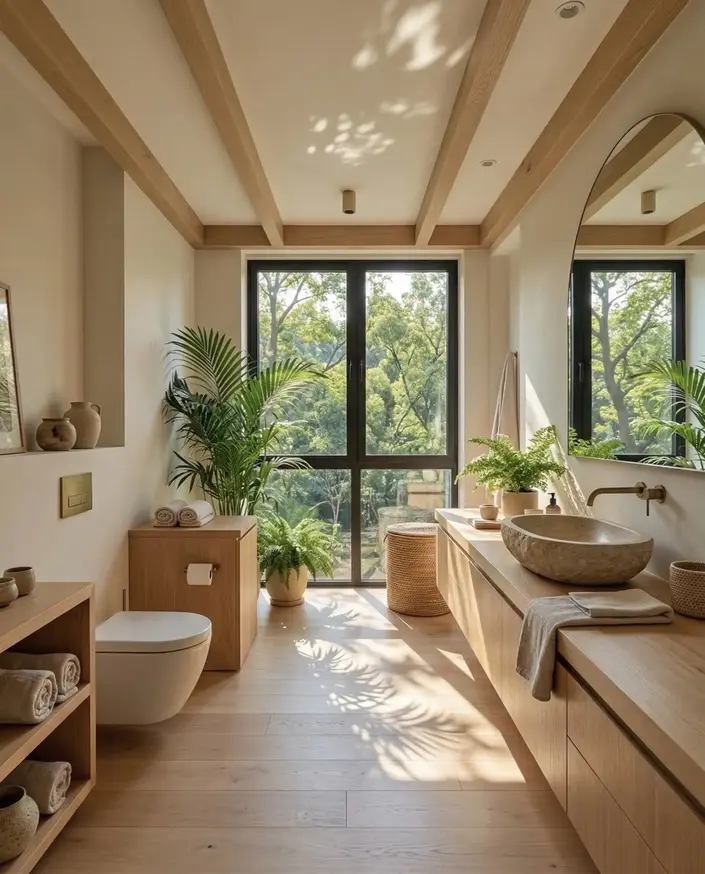
Directions Traditionally Viewed with Caution
Certain zones are more frequently discouraged in classical interpretations.
North-East (Ishaan)
The north-east traditionally receives soft morning light and was often kept open for prayer, study, or gathering. Enclosed, moisture-prone rooms here can reduce daylight penetration and the sense of openness associated with this zone.
Exact South-West Corner
The south-west is typically considered the most stable part of the home and often reserved for bedrooms or storage. Plumbing-heavy spaces here may conflict with that traditional hierarchy, although many modern homes function perfectly well with bathrooms in this location when properly designed.
These recommendations should be understood as spatial preferences rather than guarantees of negative outcomes.
Toilet Vastu for Flats vs Independent Houses
Apartment residents usually cannot relocate bathrooms because plumbing shafts are fixed across floors. As a result, Vastu guidance for flats focuses more on environmental quality than directional compliance.
Independent houses offer greater flexibility during planning, but urban plot constraints still limit options. In both cases, a well-designed bathroom with proper ventilation, waterproofing, and maintenance contributes far more to daily comfort than ideal orientation alone.
Which Direction Should the Toilet Seat Face
Traditional suggestions sometimes recommend facing north or south while using the toilet, but in modern construction the orientation is determined primarily by plumbing alignment and space efficiency.
Attempting to modify the seat direction after installation is rarely practical. Adequate clearance, privacy, and ventilation should take precedence over fixture orientation.
Attached Bathrooms in Bedrooms
Attached bathrooms are standard in contemporary homes but were uncommon in traditional layouts. Concerns usually arise when the bathroom shares a wall with sleeping areas or occupies a sensitive zone within the bedroom.
Most issues associated with attached toilets relate to moisture, odor control, and ventilation rather than direction alone. Keeping the bathroom dry, well ventilated, and properly sealed significantly improves comfort regardless of placement.
If Your Toilet Is Not in an Ideal Location
For most homeowners, especially apartment residents, relocation is not feasible. Structural changes can be expensive, disruptive, and sometimes prohibited by building regulations.
Traditional guidance in such cases emphasizes balance rather than drastic alteration. Improving ventilation, lighting, hygiene, and drainage can mitigate most functional concerns.
Strengthening other areas of the home by maximizing natural light, maintaining uncluttered living spaces, and ensuring structural soundness can help create a sense of overall harmony.
Why Vastu Guidance Often Aligns with Practical Design
Many traditional recommendations correspond closely with modern architectural principles:
- Locating utility spaces toward the periphery improves hygiene
- Separating bathrooms from kitchens reduces contamination risk
- Access to sunlight helps control moisture and odors
- Proper ventilation prevents dampness and structural damage
Viewed through this lens, Vastu can be interpreted as an early system of climate-responsive design rather than purely symbolic rules.
Practical Factors That Matter More Than Direction
Regardless of placement, these elements have the strongest impact on comfort and livability:
- Effective ventilation through windows or exhaust systems
- Proper waterproofing to prevent damp walls
- Reliable drainage with no water stagnation
- Adequate lighting
- Regular cleaning and maintenance
- Separation from kitchen areas where possible
A clean, bright, well-maintained bathroom is far less problematic than a poorly maintained one in an “ideal” direction.
Frequently Asked Questions About Toilet Vastu
Is a toilet in the north-east always a serious problem?
Not necessarily. Many homes function well with this layout when the bathroom is properly maintained and ventilated.
Can toilet placement affect property value?
Location, layout efficiency, natural light, and neighborhood factors typically have a much greater influence.
Should you reject a property solely because of toilet direction?
In most cases, no. Evaluating the overall design, construction quality, and usability of the home is more important.
Final Verdict
Perfect Vastu alignment is uncommon in modern urban housing. A home that is structurally sound, well ventilated, hygienic, and comfortable will usually provide a far better living experience than one that follows directional rules but neglects basic design quality.
Rather than treating Vastu as a checklist of prohibitions, it is more helpful to view it as guidance for creating balanced, livable spaces within real-world constraints.